
Shakti Practice Library
A Collection of recorded Kundalini Practices to Awaken & Embody Shakti

Begin with Nadi Cleansing to establish a strong foundation, or explore the chakra practices below based on your current area of focus.
Four Foundational Principles for the Practice of Kriya
(Rooted in the Yogic disciplines of Yama and Niyama)
1. Consistency in Practice Practice at least once each day. Practicing twice is welcome, but daily consistency is essential. Morning practice is preferred, as it aligns the mind and nervous system for the day ahead. 2. Commitment to Truth Strive to live in alignment with truth in your daily life. Do your best—sincerity and effort matter more than perfection. 3. Simplicity and Moderation Live as simply as you are able. Do not base your happiness on possessions or external conditions. Moderation is the key to balance and clarity. 4. Non-Harm (Ahimsa) Make a conscious effort not to cause harm to any being—human or otherwise—through thought, word, or action. With consistent daily practice, the mind gradually becomes still, and you begin to access the subtle source of inner energy. The fruits of Kriya are shaped by your dedication, one-pointed focus, and understanding of the practice. Discipline, sincerity, and perseverance—all of these matter.
Before You Begin
Please make an honest inquiry with yourself before beginning Kriya practice.
Ask yourself whether you are truly committed to your own spiritual growth and willing to make the sacrifices that authentic transformation may require. The awakening of Kundalini can be demanding once it reaches certain stages of development. To approach these practices without humility, patience, and surrender may ultimately be a disservice to yourself.
We trust that those who come to these teachings will make this assessment honestly. The Himalayan Masters are present wherever sincere Kriya is practiced. They naturally deter those who are not yet ready and guide those who are prepared toward deeper awakening and liberation.
How to Use This Library
Kundalini awakening through Kriya is typically gradual rather than forceful. As energy begins to awaken, it often rises and falls repeatedly through the lower chakras. This is a natural part of the process.
Until Kundalini has moved beyond Manipura, it commonly returns to lower centers as further purification is needed. Once awakening stabilizes around Anahata, the process often enters a deeper phase that requires greater commitment, consistency, and maturity in one's sadhana.
Our approach emphasizes what we call Shakti Management — learning to skillfully work with your own energy.
This means developing sensitivity to your system:
-
Knowing when a chakra requires attention and clearing.
-
Knowing when the body and mind need rest and integration.
-
Understanding that periods of stillness are just as important as periods of active practice.
Sustainability is essential. Deep transformation occurs through balance, not force.
Daily Nadi Shuddhi Kriya, which balances Ida and Pingala and gradually awakens Sushumna—the central channel through which Kundalini ascends—is often more important than attempting to progress through the chakras in a rigid sequence. Shakti does not move in a strictly linear fashion. She possesses her own intelligence and naturally flows toward the areas of the subtle body that require purification, healing, and integration.
Listen to Her.
The teacher provides the technique, but it is Ma who guides the process. Never forget this.
You are not here to force awakening. You are simply a vessel through which Shakti moves. Your role is to clear the way and allow her intelligence to do the work.
Suggested Path of Practice
For most practitioners, we recommend beginning with:
Daily
• Nadi Shuddhi Kriya (15–30 minutes)
• Mooladhara Chakra Kriya (15–60 minutes)
Evening (Optional)
• Trataka (candle-gazing meditation, 5–20 minutes) to gently cultivate concentration and begin awakening Ajna Chakra.
Swami Satyananda Saraswati frequently recommended the simultaneous cultivation of Mooladhara and Ajna. As purification unfolds in the lower centers, a gradually awakened Ajna helps cultivate the witnessing awareness needed to remain steady throughout the process.
As purification occurs, previously suppressed impressions and energetic blockages may rise to the surface. This can sometimes create emotional, mental, or energetic turbulence.
Maintain the attitude of a witness.
Allow yourself space to feel, release, and surrender whatever is arising. Some of these impressions may have been carried for many years, even lifetimes.
Depth Over Constant Seeking
At Art of Shakti, we value depth over accumulation. While exploration has its place, we believe genuine transformation arises through sincere, consistent engagement with practice over time.
In our experience, continually adding new methods and perspectives before a practice has had time to mature can make it more difficult to develop clarity, stability, and depth. Rather than continually seeking something new, we encourage giving each practice sufficient time to unfold before introducing additional methods.
A coherent path allows the body, mind, and subtle energy to adapt gradually. As understanding deepens through steady practice, discernment naturally grows, and the next step on the path becomes increasingly clear through direct experience.
Signs of Awakening and Energetic Movement
As practice deepens, you may begin noticing physical sensations that indicate Kundalini is gradually awakening and clearing pathways within the subtle body.
Common experiences include:
-
Heat or warmth
-
Cold sensations
-
Tingling or vibration
-
Pressure within the body
-
Temporary discomfort or soreness
-
Gentle itching or crawling sensations
-
Feelings of bliss, peace, or euphoria
-
Spontaneous body movements or postural adjustments
-
Increased sensitivity to energy, sound, or environments
-
Emotional release, including unexpected tears or laughter
-
Heightened intuition or inner clarity
-
Vivid dreams or increased dream activity
-
Periods of deep stillness or silence of mind
-
Sensations moving along the spine or through specific chakra regions
-
Natural changes in habits, desires, or interests as old patterns are released
These sensations are often felt near the chakra currently undergoing purification. For example, sensations within the chest region may indicate activity around Anahata Chakra.
Over time, you may feel intuitively drawn toward a particular chakra practice. This often occurs when Shakti is concentrating energy in a specific center and attempting to clear deeper blockages.
Trust this process while remaining grounded.
If purification becomes overwhelming, simplify your practice. Focus on mantra, devotional worship, Nadi Shuddhi Kriya, and extended periods of Shavasana. Integration is not separate from the path—it is part of the path.
Understanding Purification
Before the Amrit (nectar) comes, the poison must first surface.
The yogic path often involves a churning of the mind, emotions, and subconscious impressions. Through practice, these patterns rise into awareness so they can be witnessed, released, and transformed.
Remain patient.
Remain grounded.
Observe without becoming identified with what is arising.
The appearance of old emotions, memories, fears, or mental fluctuations does not necessarily mean something is wrong. Often, it is evidence that purification is occurring.
If challenges arise, please use the Practice Space support chat. Your teacher and fellow practitioners are walking this path alongside you and are available to offer support and perspective.
When to Seek Guidance
The practices within this library provide a strong foundation for most practitioners.
As Kundalini awakening progresses, however, individual experiences can become increasingly unique and nuanced. At more advanced stages, personalized guidance becomes important.
If you begin experiencing significant energetic movement, sustained awakening phenomena, or feel uncertain about how to proceed, we recommend seeking one-on-one guidance before advancing further.
The goal is not simply awakening energy, but learning to integrate and embody it skillfully.

Practice on an empty stomach, 2-4 hours from eating (ideally 4).
Avoid energizing practices and pranayamas in the evening time such as kapalbhati, as they will disturb sleep.
We recommend daily practice of Nadi Shuddhi Kriya to balance ida and pingala nadi, and gradually awaken sushumna as you perform Chakra awakening Kriya's for a safe, systematic awakening.
The Awakening of Kundalini is as follows:
1. Discipline Ida & Pingala Nadi
2. Awaken Chakras
3. Awaken Sushumna
4. Awaken Kundalini
When you develop a daily practice, it is best to regularly schedule your 1-hour monthly session here so the most beneficial practices can be recommended to you, and modified as you progress on your journey.
All practitioners are recommended to attend live class if possible.
Practicing live builds consistency, deepens your sadhana, and connects you with others on the path.
Please do not hesitate to reach out if you need further assistance.
Start Your Practice Here
If you are new to the library or returning to practice, follow this progression.
1.
Review step-by-step, proper techniques to channel energy.
2.
Nadi Cleansing Kriya
Begin here to balance the nervous system and prepare the energy channels.
3.
Root Chakra — Mooladhara (मूलाधार)
Color — Red
Petals — 4
Element — Earth
Beej Mantra — Lam
Location — Base of spine / perineum
Associated Gland — Adrenal glands
Primary Organs — Legs, feet, colon, bones, lower spine
Core Qualities — Grounding • survival • safety • physical stability
When Balanced
Grounded presence
Physical vitality
Emotional steadiness
Healthy boundaries
Trust in life
When Blocked
Physical manifestations
Fatigue
Lower back pain
Digestive sluggishness
Nervous system dysregulation
Emotional manifestations
Fear
Anxiety
Insecurity
Dissociation
Once Awakened
A deep sense of stability develops, allowing the practitioner to remain rooted and steady amidst life and spiritual transformation.
4.
Sacral Chakra — Swadhisthana (स्वाधिष्ठान)
Color — Orange
Petals — 6
Element — Water
Beej Mantra — Vam
Location — Lower abdomen below navel
Associated Gland — Reproductive glands
Primary Organs — Reproductive organs, kidneys, bladder, hips
Core Qualities — Emotion • creativity • sensuality • fluidity
When Balanced
Healthy emotional flow
Creativity
Openness
Adaptability
When Blocked
Physical manifestations
Hormonal imbalance
Hip tension
Lower abdominal discomfort
Emotional manifestations
Emotional numbness
Guilt
Shame
Dependency
Once Awakened
Creative life force begins flowing more freely, bringing emotional openness, vitality, and greater harmony in relationships.
5. Navel Chakra — Manipura (मणिपूर)
Color — Yellow
Petals — 10
Element — Fire
Beej Mantra — Ram
Location — Solar plexus / navel center
Associated Gland — Pancreas
Primary Organs — Digestive system, liver, stomach
Core Qualities — Willpower • discipline • transformation • inner fire
When Balanced
Confidence
Motivation
Strong discipline
Clear direction
When Blocked
Physical manifestations
Digestive issues
Low energy
Weak metabolism
Emotional manifestations
Shame
Anger
Low self-worth
Passivity
Once Awakened
The practitioner develops stronger inner fire, self-mastery, determination, and the capacity for deep transformation through practice.
6. Heart Chakra — Anahata (अनाहत)
Color — Green
Petals — 12
Element — Air
Beej Mantra — Yam
Location — Center of chest
Associated Gland — Thymus
Primary Organs — Heart, lungs, circulatory system
Core Qualities — Love • compassion • devotion • surrender
When Balanced
Compassion
Forgiveness
Emotional openness
Deep connection
When Blocked
Physical manifestations
Chest tightness
Respiratory imbalance
Upper back tension
Emotional manifestations
Grief
Isolation
Fear of vulnerability
Emotional guardedness
Once Awakened
Love begins expressing beyond personal attachment, expanding into devotion, compassion, and deeper spiritual sensitivity.
7. Throat Chakra — Vishuddhi (विशुद्ध)
Color — Blue
Petals — 16
Element — Ether / Space
Beej Mantra — Ham
Location — Throat
Associated Gland — Thyroid & parathyroid
Primary Organs — Throat, jaw, vocal cords, neck
Core Qualities — Truth • purification • communication • expression
When Balanced
Honest expression
Inner clarity
Deep listening
Authentic communication
When Blocked
Physical manifestations
Neck tension
Thyroid imbalance
Jaw tightness
Chronic throat issues
Emotional manifestations
Fear of speaking
Suppressed truth
Confusion
Excessive silence or talking
Once Awakened
Speech becomes more aligned with truth and awareness, carrying greater clarity, presence, and energetic refinement.
8. Third-Eye Chakra — Ajna (आज्ञा)
Color — Indigo
Petals — 2
Element — Light / Mind
Beej Mantra — Om
Location — Between the eyebrows
Associated Gland — Pituitary gland
Primary Organs — Eyes, brain, nervous system
Core Qualities — Intuition • perception • insight • awareness
When Balanced
Mental clarity
Strong intuition
Discernment
Deep meditation
When Blocked
Physical manifestations
Headaches
Eye strain
Sleep imbalance
Mental fatigue
Emotional manifestations
Overthinking
Mental fog
Spiritual confusion
Lack of direction
Once Awakened
Perception deepens beyond ordinary thought, allowing clearer intuition, inner vision, and meditative awareness.
9. Point Chakra — Bindhu (बिन्दु)


Color — White or silver
Petals — Traditionally not represented with petals
Element — Pure consciousness / subtle ether
Beej Mantra — Subtle Om or silence
Location — Back of the head above Ajna
Associated Gland — Pineal gland
Primary Organs — Brain and cranial energetic centers
Core Qualities — Dissolution • stillness • transcendence • unity
When Balanced
Deep stillness
Expanded awareness
Detachment from ego identity
Inner silence
When Blocked
Physical manifestations
Mental exhaustion
Sleep disturbance
Energetic depletion
Emotional manifestations
Dissociation
Spiritual escapism
Confusion between intuition and imagination
Once Awakened
Awareness begins dissolving into profound stillness, where individuality softens and consciousness returns toward silence and unity.
After completing these practices, explore the library based on what your practice needs.

When Ida and Pingala become balanced and Sushumna begins to flow,
the yogi enters a higher state of realization.
Foundations of the Technique


4 Steps to Awaken Kundalini (And Why It Matters) with Yogini Sara Singh
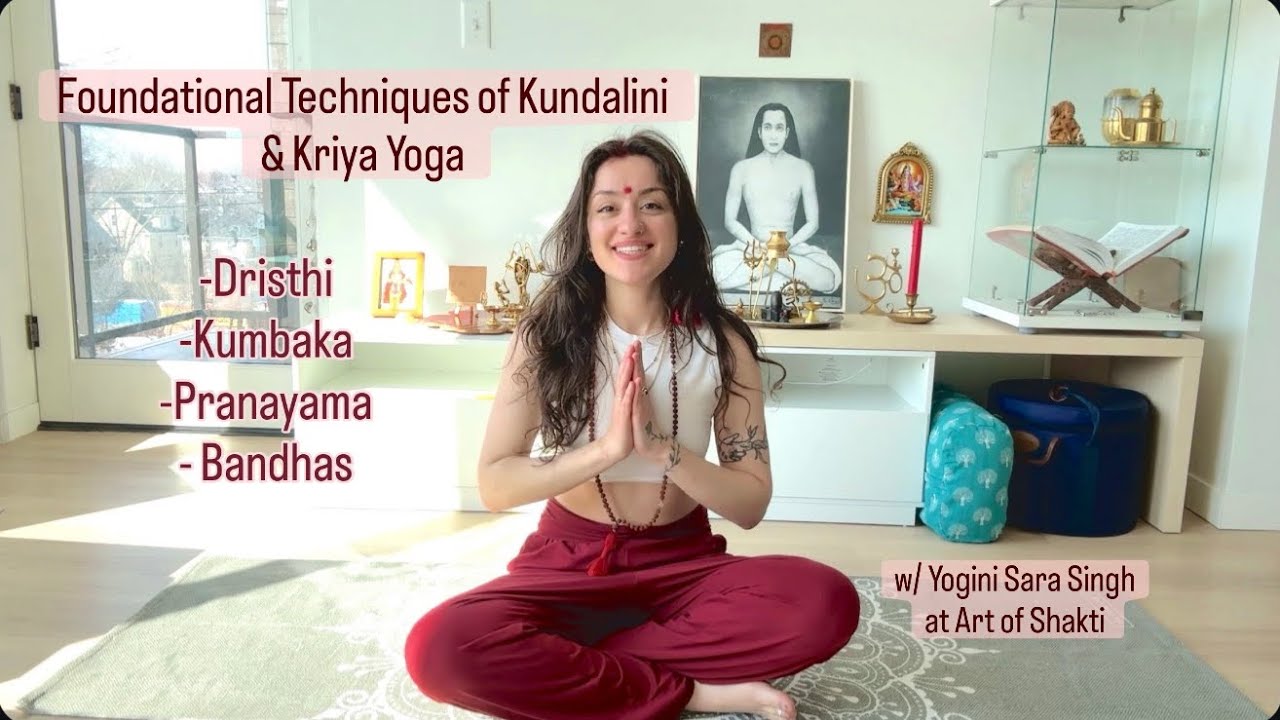
Foundational Techniques of Kundalini & Kriya Yoga - w/ Yogini Sara Singh

Siddha Yoni Asana for Women | Seated Kundalini Sadhana Tutorial with Yogini Sara Singh
Nadi Cleansing
Nadi Cleansing


Pranava & Nadi Dhyana Kriya

Nadi Shuddhi Kriya

Natural High - Vashishta Kriya

Sushumna: Maha Bandha & Nadi Shodhana
Mooladhara (1. Root Chakra)
Mooladhara (1. Root Chakra)


Mooladhara Foundations: Pt 2 (90)

Mooladhara Foundations: Pt 2 (60)

Mooladhara Foundations: Pt 2 (30)
Swadisthana (2. Sacral Chakra)
Swadisthana (2. Sacral Chakra)


Redirecting Pleasure & Desire (90)

Redirecting Pleasure & Desire (60)

Redirecting Pleasure & Desire (30)
Manipura (3. Naval Chakra)
Manipura (3. Naval Chakra)


Manipura: Learning to Digest Life

Natural High - Vashishta Kriya

The Psychology of the Chakras
Anahata (4. Heart Chakra)
Anahata (4. Heart Chakra)


Anahata: Sacred Art of Recieving

Anahata: Sacred Art of Recieving

Returning Home Within | Swadhisthana, Anahata & Ajna Chakra Kriya | 30-Minute Kundalini Yoga
Vishudhhi (5. Throat Chakra)
Vishudhhi (5. Throat Chakra)


Vishuddhi & the Wisdom of Truth | Throat Chakra Kriya | 30-Minute Kundalini Yoga | Yogini Sara Singh

Vishuddhi & Wisdom of Truth

Cut Through Vrittis - 30 min Kundalini Yoga - Vishuddhi & Ajna Chakra Kriya
Ajna (6. Third-Eye Chakra)
Ajna (6. Third-Eye Chakra)


Ajna Chakra Kriya: Love, Fear & the Courage to See Clearly | 30-Minute Kundalini Yoga

Ajna: Love, Fear & the Courage to See
Returning Home Within | Swadhisthana, Anahata & Ajna Chakra Kriya | 30-Minute Kundalini Yoga
Bindhu (7. Moon Center)
Bindhu (7. Moon Center)


The Primal Sound of Creation | Nada Yoga, Swadhisthana & Bindu Chakra | 30-Minute Kundalini Yoga

Primal Sound of Creation

Bindu & Concentration of the Mind
All Practices - Kundalini Yoga
All Practices - Kundalini Yoga

Redirecting Pleasure & Desire (90)
Redirecting Pleasure & Desire (60)